Saturday, October 1, 2016

Unit 9: A Wide World

Lesson A: Sightseeing

Sorry guys, but I cannot upload the presentation because it was on the classroom's computer
here's a video with the explaination how to use CAN:

https://www.youtube.com/watch?v=Z8XtBhFz9L8

HOMEWORKWrite a list of 5 things you CAN do, and 5 things you CAN'T do. 

Lesson B: 

Questions with can :
(Questions word) + can + subject + verb + compliment
Where                     can       we       go out      tonight?

Lesson C:

A kind of     +  General noun   
(un tipo de)
A banana is a kind of fruit


Kind of like  + singular noun  
(similar/parecido a)
Crêpes are kind of like pancakes

Unit 8: Shopping

Lesson A: Clothes
Like to / Want to / Need to / Have to

Like to
it's used for an action that you enjoy.
ex: 
I like to play video games.
She likes to cook.

Want to
It's used for an action that you wish to do.
ex:
I want to travel to Europe.
They want to learn japanese.

Need to 
It's used for an action that you should do.
ex:
You need to study more.
He needs to eat more vegetables.

Have to
It's used for an action that must be done, like orders.
ex: 
She has to clean her room.
You have to wook together.

Lesson 2: Things to buy


Question:How much + To Be+ IT/THEY? = ¿Cuánto es?
Answer: It/They + To Be + amount
Ex:
How much is it? 
It's $10.99 (Ten, nineny-nine)

How much  + IS + This / That + Singular noun?
How much is this jacket?
R/ It's $12.50 (twelve fifty)
How much  + ARE + These / Those + PLURAL noun?
How much are there gloves?
They are $6 (six dollars)


Tuesday, August 23, 2016

Unit 7: Out and about

August 20th

Lesson A: Away for the weekend


Present Continuous

Structure:

[SUJET] verb to be (am/are/is) + VERB[+ING] + Complement


Example with verb SING 


Rules to conjugate verbs with -ing

Se sustituye la terminación "-ie" por "-ying" .
VerboGerundio
diedying
lielying

 verbos acabados en -e

Se sustituye la "-e" final por "-ing"
.
VerboGerundio
useusing
havehaving

Doblado de la consonante final

Numerosos verbos doblan su consonante final para formal el gerundio:
VerboGerundio
getgetting
setsetting
forbidforbidding
Para que se realice el doblado se tienen que cumplir estas condiciones:
  1. Que la palabra acabe en una única consonante (que no sea r, w, x ó y) [ejemplo: set]
  2. Que la última consonante sea precedida de una única vocal. [ejemplo: le]
  3. Que la palabra sea monosílaba (e.g. sit, get) o bien que termine la palabra en "L"
Negative Form

La negación con los verbos normales  es muy simple:

[SUJET] +  ver "to be" (am/are/is) + NOT+ VERB [+ING] + Comp

I am not singing
yo no estoy cantando
he is not singing
él no está cantando

Question / Interrogative Form

Para construir la interrogación simplemente hay que invertir el orden del sujeto y del verbo to be:

Estructura de la interrogación:

Am/Are/Is + [SUJET] + VERB [+ing] + ?

ConjugaciónSignificado
am I singing?¿estoy cantando?
are you singing?¿estás cantando?
is he singing?¿está cantando?
are we singing?¿estamos cantando?
are you singing?¿estáis cantando?
are they singing?¿están cantando?

Usos

El "present continuous" se usa para:
  • Acciones que se están haciendo en el mismo momento que se habla
    I am eating an apple
    Yo estoy comiendo una manzana

  • Situaciones que toman  bastante tiempo (pueden tomar semanas, meses o años) puede que no las estemos haciendo en este preciso instante, pero aun no hemos terminado dicha acción. 
    I am studying medicine to become a doctor
    Yo estoy estudiando medicina para convertirme en doctor

Saturday, July 16, 2016

Unit 6:Neighborhoods

July 16th, 2016

Lesson A: Nice Places


Here is some extra vocabulary !!


An here is a list of adjectives !! You have to search the meaning 


REMEMBER: Adjetives go before nouns:

a beautiful park
an impressive museum
some crowded stores 

July 23rd
Lesson B: What time is it?
How to tell Time

There are 2 ways to tell time

1) Hour + minutes

(5:00)   It's five o'clock
 (5:05)  It's five oh five
(5:15)  It's five fifteen
(5:30)  It's five thirty
(5:47)  It's five forty seven

*Note: You can also add AM (if it's before 12) or PM (if it's after 12)
(5:15)  It's five fifteen AM
(5:30)  It's five thirty PM
(5:47)  It's five forty seven PM

2) minutes + past/to + hour


Questions with WHAT TIME

Recuerden, el orden será siempre el mismo que hemos visto en clases (según las palabras que les dan para usar)

Basic Structure:

WH Questions Word  +         aux          +    Subject        +     Verb     +     Comp     +  ?

                             What time                do                  you              leave home  in the morning ?
                          
                        (*) What time           does      your favorite tv show      start                             ?

                               What time              do                 museums               open     in the weekends?

                               What time            does       your best friend           get home in the weekends?

(*) In some cases, you don't need a complement


Lesson C: Me too


Me too = Yo tambien

A: I like dogs
B: Me too !

If you agree and the first sentence is AFFIRMATIVE, the answer will be Me Too


Me neither = Yo tampoco

A: I don't like cats
B: Me neither

If you agree and the first sentence is NEGATIVE, the answer will be Me Neither


**WRITING AND SPEAKING ACTIVITY **

Write a short paragraph about your neiborhood, use There is / There Are and adjectives to describe it !! The students will pass upfront to recite it

Example:

I live in an excellent neighborhood. It's called Sierra Morena and it is very nice and quiet.There are a lot of great "pupuserias" here. There are also some incredible restaurants of mexican food. There is a small sport center with  some basketball courts, some soccer fields and there's a playground for the kids too. There is a very convenient mall nearby called Plaza Mundo. I really love my neigborhood.

Friday, July 1, 2016

Unit 5: Free time

June 28th, 2016

Lesson A: Going Out


Information questions

We use them to ask for someting. example:
What do you do in your free time?

We use the question words:

What  ----  things or activities
What do you do? R/ I work and study (activities)

Who -----  People
Who are you? R/ I'm your new teacher.

Where ----- Places
Where are we going for dinner? R/ To Pizza Hut.

When ----  Specific time
When do you work? R/ I work on saturdays 

How often ---- Number of times
How often do you go to the gym? R/ I go to the gym 3 times a week.


July 2nd

Lesson B: TV Shows
Frequency Adverbs
They express how often you do an activity
Pay attention to the structure below


In this link (Types of TV Shows) you will find different types of tv show

Expressing likes and dislikes


            Lesson C: Do you go straight home?

We use double questions to show more interest or to say something in adifferent way

What do you do after class? Do you go straight home?

Are you busy in the evenigs? I mean, do you have a part time job?

Las palabras "I mean" se usan para decir las cosas de una manera distinta o para agregar información adicional y mostrar interés en la conversación.

***HOMEWORK***

TASK: The students will write a short paragraph (this will be the writen evaluacion for unit 5) and  talk about their favorite TV show (This will be the Oral evaluation) and describe: 
  • how often they see it, 
  • what’s the plot about, 
  • describe the main characters, 
  • Explain why they love it
etc. they will have to use the structures and functions seen in these units.
* Students can bring a poster, PowerPoint Presentation or a link of the trailer we can play in youtube (This is opcional, but the short paragraph on a sheet of paper is mandatory)
Example:

My Favorite TV Show


My favorite TV show is Game of Thrones. I usually watch it once a week. It´s about 4 families (The Starks, Baratheons, Lannisters and Targaryens) that try to rule over the 7 kingdoms. The main characters are Jon Snow, who is a loyal and honorable warrior and Daenerys Targaryen, who is a queen with 3 dragons. I love this show because it´s so unpredictable. You never know what is going to happen to your favorite characters.


Wednesday, June 8, 2016

Unit 4: Everyday Life


June 4, 2016


June 11


Now, you can do this exercise, change the sentence in the right to the negative and interrogative form:
Example:
 (Aff) I study in the evening. (Neg) I don't study in the evening. (Int) Do I study in the evening?


HOMEWORK:

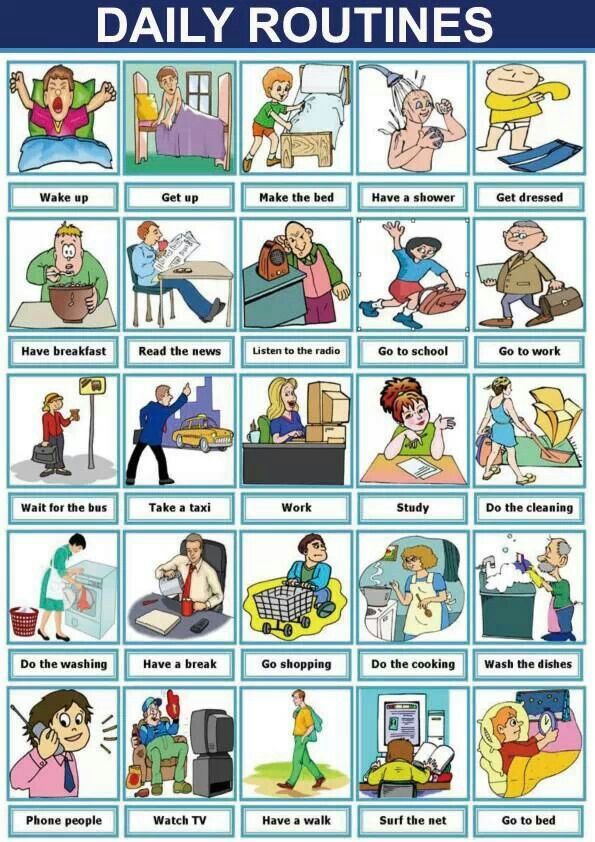
Bring your own routine with at least10 activities you do every day (7 in affirmative and 3 in negative form) 
you can chose any activity from this picture

and you can watch this video to see how to do your presentation:


Saturday, May 21, 2016

Unit 3: Favorite People

May 14, 2016


Lesson A: Celebrities


Descriptions: Read the descriptions below. Pay attention to how the sentences are written.


He's an actor

He's good-looking

His movies are great


They're soccer players

Their matches are amazing

Their match is amazing


 She's a singer

Her voice is good

She is very talented

Her videos are interesting


Be statements

Possesive adjectives

Remember: El verbo To Have significa "tener" por ejempo: 
+ I have a shirt = Yo tengo una camisa
+ My shirt is green = Mi camisa es verde


May 21, 2016

Lesson B: People we know

You can use these adjectives to describe people you know (friends, family, neighbors, etc) 

Do the exercise below !! describe The Simpsons !!


Yes/No questions


Lesson C: Family

Numbers from 10 to 100

You can watch this VIDEO to listen to the pronunciation

https://www.youtube.com/watch?v=SxgCA1qOW20

>>> NEXT WEEK'S ACTIVITY <<<

Oral Presentation
Create your own Family Tree, you have to describe each family member using the following structures:


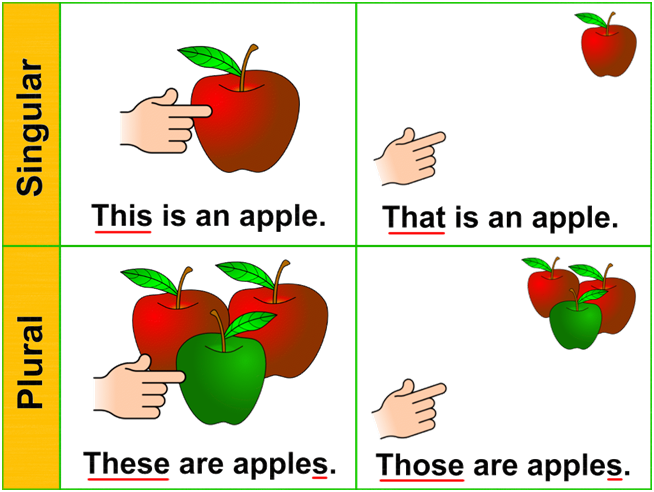
  • This is / These are
  • His/ Her name is...
  • Age: He's / She's  70 years old
  • Descriptions (subject + To Be conjugated + Adjective) ex. My Father is great

Lesson D

Conversation strategy: ...a writer? really?

We use this structure to show interest

A: So, who is that?
B: That's my cousin, Sarah, she's a writer.
A: a writer? really?
B: Yes, she's quite famous.

Esta estructura es bastante sencilla, para mostrar interés en una conversación, simplemente hay que repetir la ultima cosa que una persona dice (si lo consideramos algo interesante o sorprendente) y lo hacemos pregunta, luego agregamos el Really? para enfatizar más aun la sorpresa y el interés o formulamos una pregunta nueva.

More examples: 

A: Where are you from?
B: I'm from France.
A: France? really? I Paris a nice city?
B: Yes, it is.
-------------------------------------------------
A: My co-workers are nice.
B: Really? what about your boss?
A: She's great. And she's not very strict.