Tuesday, December 6, 2016

Unit 12: Fabulous Food

Lesson A: Eating habits

Countable VS Uncountable Nouns
Los sustantivos contables son aquellos que podemos pluralizar: (an apple = 2 apples, a cake= seven cakes)
Los no contables, son los que son imposibles de pluralizar: ( a water? X incorret, Some water = correct!)

la primer columna muestra las formas de pluralizar los nouns: generalmente solo se le agrega S al final: Apple --- Apples
pero en otros casos cambia, Atencion !

Lesson B: What's for dinner?

Types of food
                Fruits             


                   Meat                                                   Seafood                        


Would you like VS Would you like to

Would you like +  countable or uncountable noun
example: 
Would you like some milk?
Would you like 3 cookies?

Would you like to +  verb + compl
example:
Would you like to play soccer?
Would you like to eat dinner with us?

Any / Some

We use SOME in:
* Affirmative sentences with countable or uncountable nouns
I want some cookies.
She wants some water.

*Questions (requests) with WOULD
Would you like some ketchup with your fries?

We use ANY in:
* Negative sentences with countable or uncountable nouns
I don't want any cookies.
She doesn't want any water.

*Questions with DO
Do you need any money?
Do you want any snack from the fridge?

**** PRACTICE ****


Unit 12 oral and written activity

Students will write about their favorite food ! they'll have to explain why they like it, where is it from and what are the ingredients.

Example:


My favorite food is pizza. It is an italian dish. I love it because it is very tasty and delicious. my favorite toppings are some peperoni, some mushrooms and some bacon. I dont like any vegetables on my pizza. but I also like a 4 cheese pizza with no toppings at all. I usually eat it twice a month. My favorite restaurant is Domino's. I think their pizza is the best! 

Unit 11: Looking Back


Unit 10: Busy Lives

Simple Past

Questions with simple past


Saturday, October 1, 2016

Unit 9: A Wide World

Lesson A: Sightseeing

Sorry guys, but I cannot upload the presentation because it was on the classroom's computer
here's a video with the explaination how to use CAN:

https://www.youtube.com/watch?v=Z8XtBhFz9L8

HOMEWORKWrite a list of 5 things you CAN do, and 5 things you CAN'T do. 

Lesson B: 

Questions with can :
(Questions word) + can + subject + verb + compliment
Where                     can       we       go out      tonight?

Lesson C:

A kind of     +  General noun   
(un tipo de)
A banana is a kind of fruit


Kind of like  + singular noun  
(similar/parecido a)
Crêpes are kind of like pancakes

Unit 8: Shopping

Lesson A: Clothes
Like to / Want to / Need to / Have to

Like to
it's used for an action that you enjoy.
ex: 
I like to play video games.
She likes to cook.

Want to
It's used for an action that you wish to do.
ex:
I want to travel to Europe.
They want to learn japanese.

Need to 
It's used for an action that you should do.
ex:
You need to study more.
He needs to eat more vegetables.

Have to
It's used for an action that must be done, like orders.
ex: 
She has to clean her room.
You have to wook together.

Lesson 2: Things to buy


Question:How much + To Be+ IT/THEY? = ¿Cuánto es?
Answer: It/They + To Be + amount
Ex:
How much is it? 
It's $10.99 (Ten, nineny-nine)

How much  + IS + This / That + Singular noun?
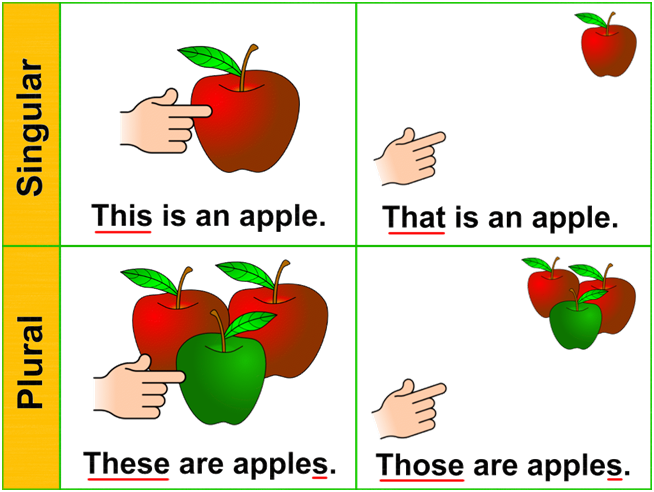
How much is this jacket?
R/ It's $12.50 (twelve fifty)
How much  + ARE + These / Those + PLURAL noun?
How much are there gloves?
They are $6 (six dollars)


Tuesday, August 23, 2016

Unit 7: Out and about

August 20th

Lesson A: Away for the weekend


Present Continuous

Structure:

[SUJET] verb to be (am/are/is) + VERB[+ING] + Complement


Example with verb SING 


Rules to conjugate verbs with -ing

Se sustituye la terminación "-ie" por "-ying" .
VerboGerundio
diedying
lielying

 verbos acabados en -e

Se sustituye la "-e" final por "-ing"
.
VerboGerundio
useusing
havehaving

Doblado de la consonante final

Numerosos verbos doblan su consonante final para formal el gerundio:
VerboGerundio
getgetting
setsetting
forbidforbidding
Para que se realice el doblado se tienen que cumplir estas condiciones:
  1. Que la palabra acabe en una única consonante (que no sea r, w, x ó y) [ejemplo: set]
  2. Que la última consonante sea precedida de una única vocal. [ejemplo: le]
  3. Que la palabra sea monosílaba (e.g. sit, get) o bien que termine la palabra en "L"
Negative Form

La negación con los verbos normales  es muy simple:

[SUJET] +  ver "to be" (am/are/is) + NOT+ VERB [+ING] + Comp

I am not singing
yo no estoy cantando
he is not singing
él no está cantando

Question / Interrogative Form

Para construir la interrogación simplemente hay que invertir el orden del sujeto y del verbo to be:

Estructura de la interrogación:

Am/Are/Is + [SUJET] + VERB [+ing] + ?

ConjugaciónSignificado
am I singing?¿estoy cantando?
are you singing?¿estás cantando?
is he singing?¿está cantando?
are we singing?¿estamos cantando?
are you singing?¿estáis cantando?
are they singing?¿están cantando?

Usos

El "present continuous" se usa para:
  • Acciones que se están haciendo en el mismo momento que se habla
    I am eating an apple
    Yo estoy comiendo una manzana

  • Situaciones que toman  bastante tiempo (pueden tomar semanas, meses o años) puede que no las estemos haciendo en este preciso instante, pero aun no hemos terminado dicha acción. 
    I am studying medicine to become a doctor
    Yo estoy estudiando medicina para convertirme en doctor

Saturday, July 16, 2016

Unit 6:Neighborhoods

July 16th, 2016

Lesson A: Nice Places


Here is some extra vocabulary !!


An here is a list of adjectives !! You have to search the meaning 


REMEMBER: Adjetives go before nouns:

a beautiful park
an impressive museum
some crowded stores 

July 23rd
Lesson B: What time is it?
How to tell Time

There are 2 ways to tell time

1) Hour + minutes

(5:00)   It's five o'clock
 (5:05)  It's five oh five
(5:15)  It's five fifteen
(5:30)  It's five thirty
(5:47)  It's five forty seven

*Note: You can also add AM (if it's before 12) or PM (if it's after 12)
(5:15)  It's five fifteen AM
(5:30)  It's five thirty PM
(5:47)  It's five forty seven PM

2) minutes + past/to + hour


Questions with WHAT TIME

Recuerden, el orden será siempre el mismo que hemos visto en clases (según las palabras que les dan para usar)

Basic Structure:

WH Questions Word  +         aux          +    Subject        +     Verb     +     Comp     +  ?

                             What time                do                  you              leave home  in the morning ?
                          
                        (*) What time           does      your favorite tv show      start                             ?

                               What time              do                 museums               open     in the weekends?

                               What time            does       your best friend           get home in the weekends?

(*) In some cases, you don't need a complement


Lesson C: Me too


Me too = Yo tambien

A: I like dogs
B: Me too !

If you agree and the first sentence is AFFIRMATIVE, the answer will be Me Too


Me neither = Yo tampoco

A: I don't like cats
B: Me neither

If you agree and the first sentence is NEGATIVE, the answer will be Me Neither


**WRITING AND SPEAKING ACTIVITY **

Write a short paragraph about your neiborhood, use There is / There Are and adjectives to describe it !! The students will pass upfront to recite it

Example:

I live in an excellent neighborhood. It's called Sierra Morena and it is very nice and quiet.There are a lot of great "pupuserias" here. There are also some incredible restaurants of mexican food. There is a small sport center with  some basketball courts, some soccer fields and there's a playground for the kids too. There is a very convenient mall nearby called Plaza Mundo. I really love my neigborhood.